




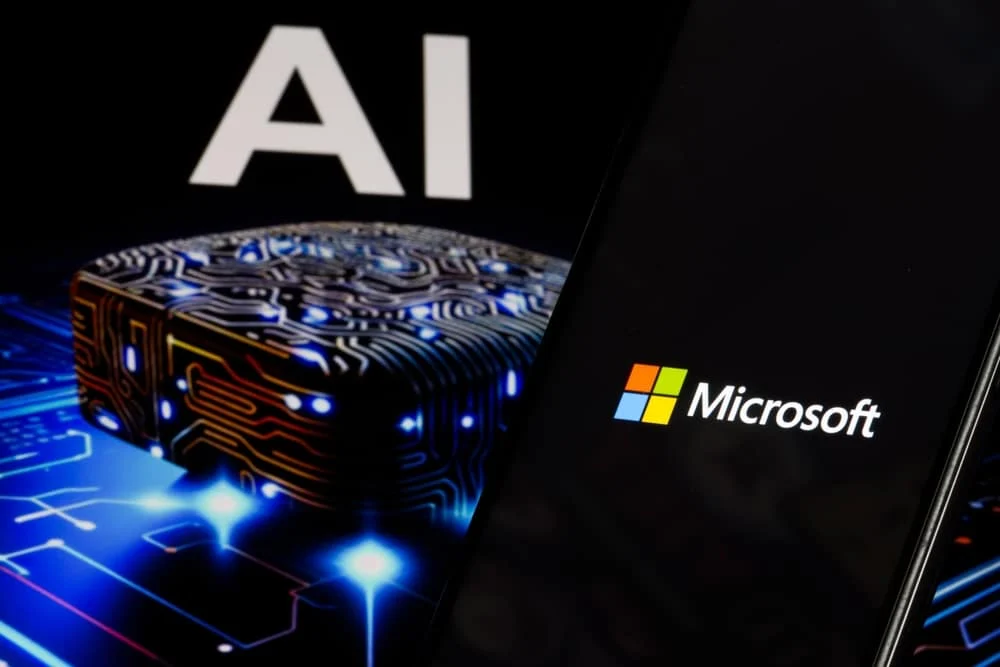

Microsoft has positioned itself as one of the global leaders in enterprise artificial intelligence, making large-scale investments in infrastructure, software, and AI-powered tools designed specifically for business use. Rather than focusing solely on consumer applications, Microsoft’s strategy centers on embedding AI deeply into enterprise workflows—across cloud platforms, productivity tools, and industry-specific solutions.
- A Multi-Billion Dollar Bet on AI Infrastructure
- Azure AI: The Foundation of Enterprise Adoption
- Copilot: AI Integrated Into Business Workflows
- AI Agents and Automation at Scale
- Strategic Partnership with OpenAI
- Enterprise Revenue and Business Impact
- Organizational Changes to Strengthen AI Focus
- Challenges in Enterprise AI Adoption
- The Future of Enterprise AI at Microsoft
This approach is reshaping how organizations operate, automate processes, and make data-driven decisions.
A Multi-Billion Dollar Bet on AI Infrastructure
One of the clearest indicators of Microsoft’s commitment to enterprise AI is its massive investment in cloud and infrastructure.
The company continues to expand its global data center network, operating over 400 data centers across 70 regions, with every Azure region now optimized for AI workloads.
In addition, Microsoft announced a $30 billion investment in AI infrastructure in the United Kingdom between 2025 and 2028, including the development of one of the country’s largest AI supercomputers powered by thousands of GPUs.
These investments are critical for supporting enterprise-scale AI applications, which require:
- High-performance computing
- Large-scale data processing
- Reliable and secure cloud environments
Azure AI: The Foundation of Enterprise Adoption
At the core of Microsoft’s enterprise AI strategy is Azure, its cloud computing platform.
Azure has become a central hub for:
- Machine learning model deployment
- Data analytics and automation
- Integration with third-party and proprietary AI models
The rapid growth of Azure reflects strong enterprise demand. Cloud revenue has surged in recent years, with Azure and related services growing by around 39% year-over-year, driven largely by AI workloads.
This growth highlights how businesses are increasingly relying on Microsoft’s cloud ecosystem to power AI-driven transformation.
Copilot: AI Integrated Into Business Workflows
A major pillar of Microsoft’s enterprise AI offering is Copilot, a suite of AI assistants integrated across its software products.
Copilot is embedded into:
- Microsoft 365 (Word, Excel, Outlook, Teams)
- GitHub (for coding assistance)
- Dynamics 365 (CRM and ERP systems)
- Power Platform (automation and low-code development)
These tools help users:
- Generate and summarize documents
- Automate repetitive tasks
- Analyze large datasets
- Assist with coding and software development
Copilot has evolved into a broad ecosystem, including specialized versions for sales, customer service, and finance, tightly integrated with Azure AI services.
AI Agents and Automation at Scale
Microsoft is also investing heavily in AI agents—autonomous systems that can perform complex tasks across enterprise environments.
With tools like Copilot Studio, organizations can build custom AI agents that:
- Automate workflows
- Interact with internal systems
- Support decision-making processes
This marks a shift from simple AI assistants to fully integrated operational systems that can execute multi-step business processes.
Research and enterprise trials show that AI agents can significantly improve productivity. For example, in internal testing environments, AI-assisted systems have demonstrated:
- Faster task completion
- Higher accuracy in complex workflows
- Improved efficiency in IT and security operations
These capabilities are driving adoption across industries such as finance, healthcare, and logistics.
Strategic Partnership with OpenAI
A key component of Microsoft’s AI leadership is its long-term partnership with OpenAI.
Microsoft has invested billions of dollars into OpenAI and integrates its models into Azure and Copilot products. This partnership enables enterprises to access advanced generative AI models through Microsoft’s cloud infrastructure.
At the same time, Microsoft is also investing in its own AI model development to reduce reliance on external providers and strengthen its long-term position.
Enterprise Revenue and Business Impact
AI is becoming a major revenue driver for Microsoft.
The company is targeting $25 billion in AI-related revenue by fiscal year 2026, fueled by demand for Azure AI services and Copilot products.
More broadly:
- Microsoft Cloud revenue has exceeded $50 billion per quarter
- AI is a key contributor to this growth
- Enterprise adoption continues to accelerate across sectors
For businesses, the impact includes:
- Increased productivity
- Reduced operational costs
- Faster decision-making
- Enhanced customer experiences
Organizational Changes to Strengthen AI Focus
Microsoft is also restructuring internally to better align its AI strategy with enterprise needs.
Recent reports highlight that Microsoft is:
- Unifying its Copilot ecosystem across consumer and enterprise products
- Investing in proprietary AI model development
- Streamlining leadership to accelerate innovation
These changes reflect the company’s long-term ambition to build a cohesive, enterprise-first AI platform.
Challenges in Enterprise AI Adoption
Despite strong momentum, Microsoft faces several challenges:
Adoption Gaps
While Copilot has gained traction, adoption remains a fraction of Microsoft’s total enterprise user base, indicating that many organizations are still in early stages of AI integration.
Infrastructure Constraints
The rapid growth of AI demand is putting pressure on cloud infrastructure, requiring continuous investment in data centers and hardware.
Governance and Security
Enterprises must address:
- Data privacy
- Compliance
- AI governance
Experts emphasize that successful AI deployment depends not just on technology, but on structured implementation and oversight.
The Future of Enterprise AI at Microsoft
Looking ahead, Microsoft’s enterprise AI strategy is expected to focus on:
- Deeper integration of AI across all business applications
- Expansion of AI agents and automation systems
- Continued investment in cloud infrastructure and custom AI models
- Strengthening its ecosystem to create long-term enterprise “lock-in”
The company’s broader goal is not just to provide AI tools, but to become the default platform for enterprise AI operations worldwide.