





Google is accelerating the transformation of its core product—Search—by integrating advanced artificial intelligence tools powered by its Gemini models. Over the past two years, the company has introduced a new generation of AI-driven features designed to make search more conversational, personalized, and capable of handling complex tasks.
These updates mark one of the most significant shifts in how users interact with information online, moving beyond traditional lists of links toward fully generated answers and intelligent assistance.
From Search Engine to “Answer Engine”
At the center of this transformation is AI Overviews, a feature that generates concise, AI-written summaries at the top of search results. Originally launched as the Search Generative Experience (SGE), it has now become a core part of Google Search in many regions.
AI Overviews are powered by Gemini models and are designed to:
- Summarize information from multiple sources
- Provide direct answers to complex queries
- Reduce the need to visit multiple websites
This feature represents a major evolution in search behavior. Instead of manually comparing links, users receive structured, synthesized responses instantly.
Google has also expanded these capabilities with improved planning and research tools, allowing users to ask multi-step questions and receive detailed, context-aware answers.
AI Mode: A More Conversational Search Experience
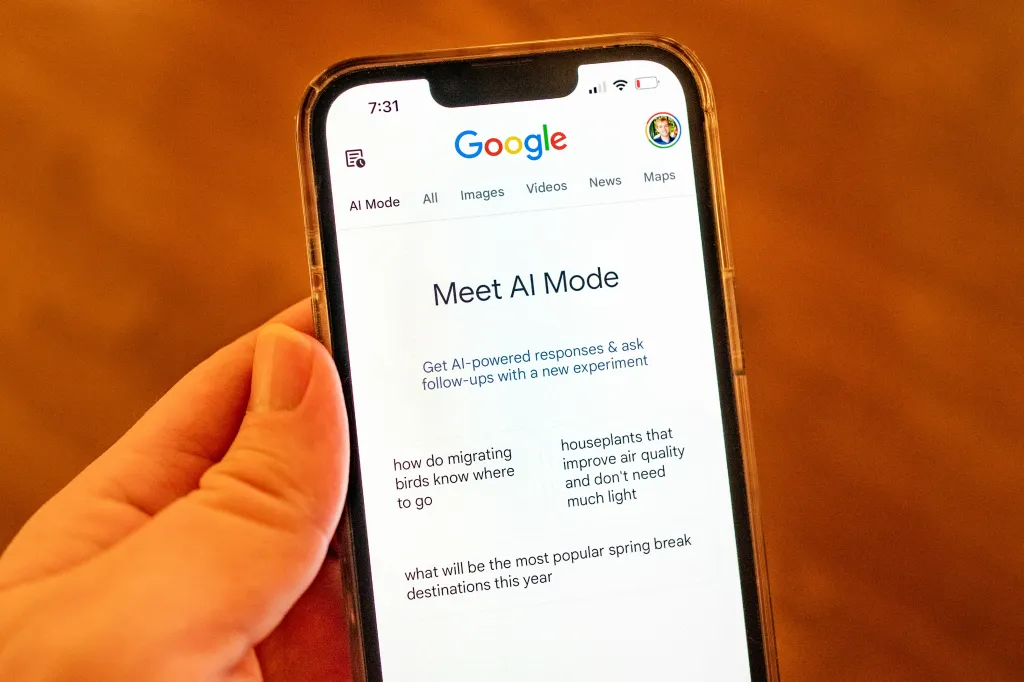
Another major innovation is AI Mode, an experimental interface that turns search into a chatbot-like experience. Powered by advanced versions of Gemini, AI Mode allows users to:
- Ask follow-up questions naturally
- Explore topics in depth without restarting searches
- Receive step-by-step explanations
Google has integrated increasingly powerful models—such as Gemini 2.5 and later versions—directly into Search, significantly improving reasoning and response quality.
This approach brings search closer to conversational AI assistants, competing directly with platforms like ChatGPT.
Personalization with “Personal Intelligence”
A key recent development is the expansion of personalized AI features within Search and the broader Google ecosystem.
Google Gemini can now integrate with services like Gmail, YouTube, and Google Photos to deliver more tailored responses. This feature—often referred to as “Personal Intelligence”—allows AI to:
- Provide recommendations based on user preferences
- Offer contextual assistance across apps
- Adapt answers using personal data (opt-in only)
Importantly, Google emphasizes that users maintain control over their data and can disable these connections at any time.
Multimodal and Real-Time Search Tools
Google is also expanding search beyond text through multimodal AI capabilities.
New tools include:
- Live search with camera input, allowing users to point their phone at objects and receive real-time explanations or suggestions
- Screen-sharing features for contextual assistance
- Voice and audio summaries of search results
These innovations enable users to interact with search in more natural ways—by speaking, showing, or sharing content instead of typing queries.
AI Integration Across Google Products
Search improvements are part of a broader strategy to embed AI across Google’s ecosystem. Gemini is now integrated into:
- Google Search
- Chrome (for browsing assistance)
- Gmail and Workspace tools (for writing and productivity)
- Google Maps (via conversational features like “Ask Maps”)
For example, AI-powered features in Maps allow users to ask complex, real-world questions and receive personalized recommendations for navigation, travel, and local discovery.
This ecosystem approach ensures that AI assistance is consistent and interconnected across platforms.
Improving Accuracy and Reducing Errors
As Google expands AI in search, it is also addressing challenges related to accuracy and reliability.
The company has introduced:
- Stronger model reasoning capabilities (Gemini 3 and beyond)
- Safeguards to reduce “hallucinations”
- Links to source material within AI-generated answers
However, not all experiments have succeeded. Some features—such as AI-generated health suggestions based on user experiences—were removed after concerns about reliability and clarity.
This reflects the ongoing challenge of balancing innovation with trustworthiness in AI-powered search.
Impact on Users and the Web
The expansion of AI tools in Search is changing how people access information:
For users:
- Faster answers to complex questions
- More intuitive, conversational interactions
- Reduced need for multiple searches
For publishers and businesses:
- Less direct traffic from traditional search results
- Increased importance of being cited in AI summaries
- New strategies for AI-driven visibility (often called Generative Engine Optimization)
In fact, AI-generated summaries now appear in a significant share of search queries, signaling a major shift in the digital landscape.
The Future of AI-Powered Search
Google’s continued investment in AI suggests that search will become increasingly:
- Conversational — resembling dialogue rather than keyword queries
- Personalized — tailored to individual users and contexts
- Multimodal — combining text, voice, images, and video
- Action-oriented — capable of completing tasks, not just providing information
With ongoing updates to Gemini models and deeper integration across products, Google is positioning Search as a comprehensive AI assistant rather than just a discovery tool.
Google’s expansion of AI capabilities in search represents a fundamental shift in how information is delivered and consumed online. By combining powerful Gemini models with new user tools—such as AI Overviews, AI Mode, and personalized assistance—the company is redefining the role of search in everyday life.
While challenges around accuracy and trust remain, the direction is clear: search is evolving into an intelligent, interactive system designed to understand users, not just index the web.