

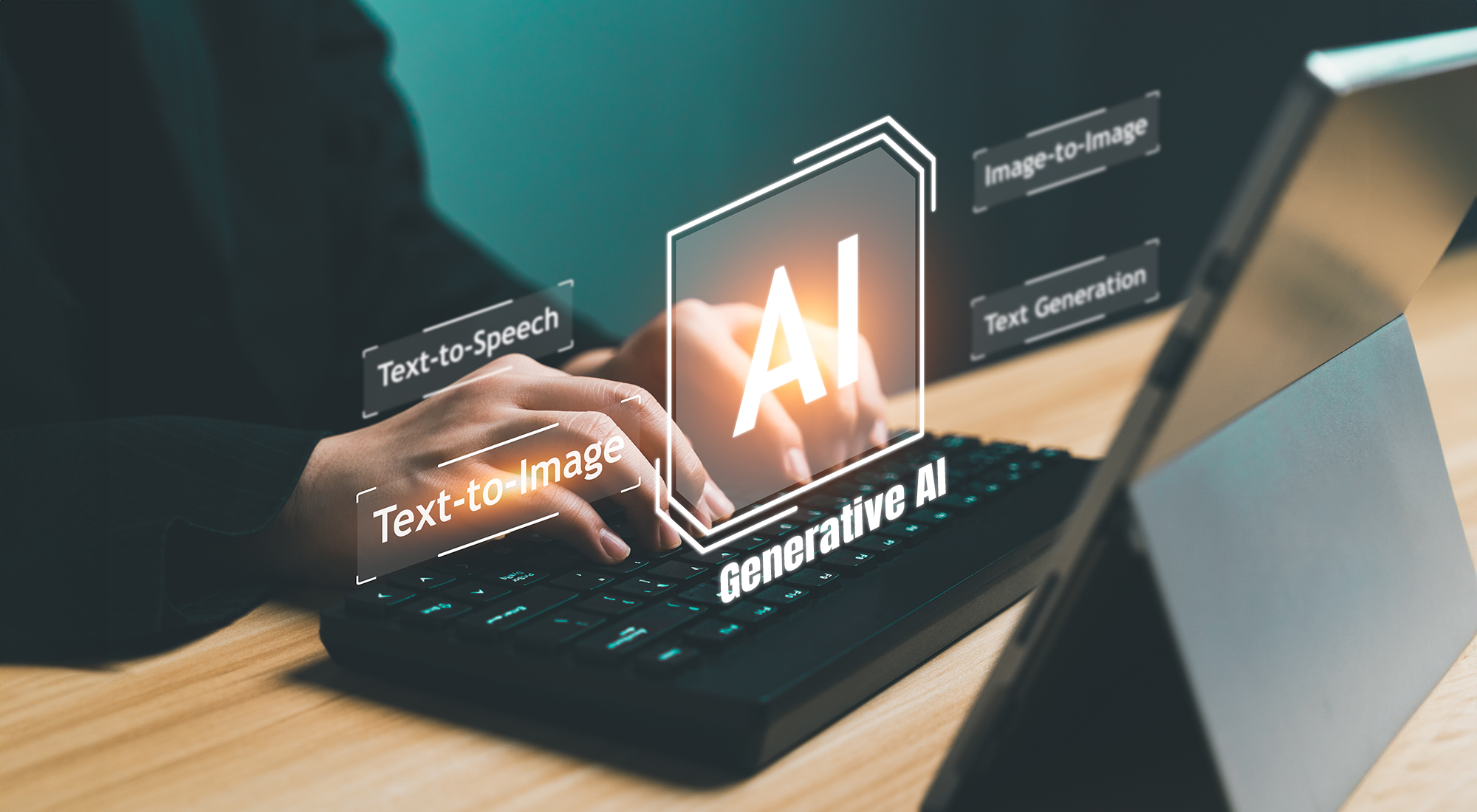

The rapid advancement of generative artificial intelligence is transforming how digital content is created, distributed, and consumed. Tools powered by large language models, image generators, and multimodal systems are now widely used across industries—from media and marketing to software development and education.
- From Manual Creation to AI-Assisted Workflows
- Text Generation and the Transformation of Writing
- Visual Content: AI as a Creative Partner
- The Emergence of AI-Generated Video and Audio
- Personalization at Scale
- Impact on Creative Industries
- The Role of Multimodal AI
- Accuracy, Trust, and Quality Control
- Economic and Market Impact
- The Future of Content Creation
Companies like OpenAI, Google, Meta, and Adobe are driving this shift, introducing platforms that enable users to generate high-quality text, images, video, and audio with minimal effort.
This evolution marks one of the most significant changes in digital production since the rise of social media and mobile content creation.
From Manual Creation to AI-Assisted Workflows
Traditionally, digital content creation required specialized skills, time, and resources. Writing articles, designing visuals, editing videos, or composing music involved multiple professionals and tools.
Generative AI has fundamentally changed this process by enabling:
- Instant text generation (articles, scripts, summaries)
- AI-assisted design and image creation
- Automated video editing and generation
- Synthetic voice and music production
For example, tools like ChatGPT, Google Gemini, and Adobe Firefly allow creators to produce content in minutes that previously required hours or days.
This shift is not replacing creators but augmenting their capabilities, allowing individuals and small teams to scale output dramatically.
Text Generation and the Transformation of Writing
One of the most mature applications of generative AI is text generation.
Large language models can now:
- Write articles, blog posts, and marketing copy
- Summarize long documents
- Translate content across languages
- Generate code and technical documentation
This has had a major impact on industries such as:
- Journalism
- Content marketing
- Customer support
- Education
For instance, AI tools are increasingly used in newsrooms to draft reports, generate headlines, and assist with research—while human editors maintain oversight.
Visual Content: AI as a Creative Partner
Generative AI is also revolutionizing visual design.
Platforms powered by diffusion models can create:
- Photorealistic images
- Illustrations and concept art
- Branding assets
- Product mockups
Adobe has integrated AI directly into its Creative Cloud suite, enabling designers to generate and edit images using simple text prompts.
Meanwhile, AI-generated visuals are widely used in:
- Social media content
- Advertising campaigns
- Game development
- Film pre-production
This reduces the barrier to entry for visual storytelling and enables rapid experimentation.
The Emergence of AI-Generated Video and Audio
Video and audio generation represent the next frontier.
Recent advances allow AI to:
- Generate short videos from text prompts
- Create realistic voiceovers
- Clone voices for narration
- Produce music and sound effects
These capabilities are being adopted in:
- YouTube content creation
- Podcast production
- Film and media workflows
- E-learning platforms
While still evolving, AI video tools are improving rapidly and are expected to become mainstream in the coming years.
Personalization at Scale
One of the most powerful aspects of generative AI is its ability to personalize content at scale.
Businesses can now:
- Generate tailored marketing messages for individual users
- Customize product recommendations
- Adapt content for different audiences and regions
For example, e-commerce platforms use AI to create personalized descriptions, emails, and ads based on user behavior.
This level of personalization was previously impossible without massive human effort.
Impact on Creative Industries
The rise of generative AI is reshaping entire creative industries.
Opportunities:
- Increased productivity for creators
- Lower production costs
- New creative tools and formats
- Democratization of content creation
Challenges:
- Concerns about originality and authorship
- Copyright and licensing issues
- Risk of content oversaturation
- Ethical questions حول AI-generated media
Creative professionals are adapting by integrating AI into their workflows rather than competing with it.
The Role of Multimodal AI
Modern AI systems are increasingly multimodal, meaning they can work across text, images, audio, and video simultaneously.
For example:
- A user can generate an article, create accompanying visuals, and produce a narrated video—all within a single workflow
- AI tools can analyze and transform content across formats
This convergence is enabling entirely new forms of storytelling and content production.
Accuracy, Trust, and Quality Control
Despite its capabilities, generative AI still faces challenges:
- Factual accuracy — models can produce incorrect or misleading information
- Consistency — outputs may vary in quality
- Bias and safety — AI-generated content must be carefully monitored
As a result, human oversight remains essential, especially in professional and high-stakes contexts.
Companies are investing heavily in improving:
- Model reliability
- Source attribution
- Content verification tools
Economic and Market Impact
Generative AI is already having a measurable economic impact.
Key trends include:
- Rapid growth in AI-powered content platforms
- Increased demand for AI-skilled professionals
- Shift in business models for media and marketing
The global generative AI market is projected to grow into the hundreds of billions of dollars over the next decade, reflecting widespread adoption across industries.
The Future of Content Creation
Looking ahead, generative AI is expected to become a standard component of all digital creation tools.
Future developments may include:
- Real-time AI collaboration tools
- Fully automated content pipelines
- More advanced video generation
- Deeper integration into everyday applications
Rather than replacing human creativity, AI is likely to enhance and expand it, enabling new forms of expression and innovation.
The rise of generative AI is fundamentally reshaping digital content creation. By automating complex tasks, enabling personalization, and expanding creative possibilities, AI is transforming how content is produced and consumed.
As technology continues to evolve, the relationship between humans and AI in creative work will become increasingly collaborative—defining the next era of digital media.